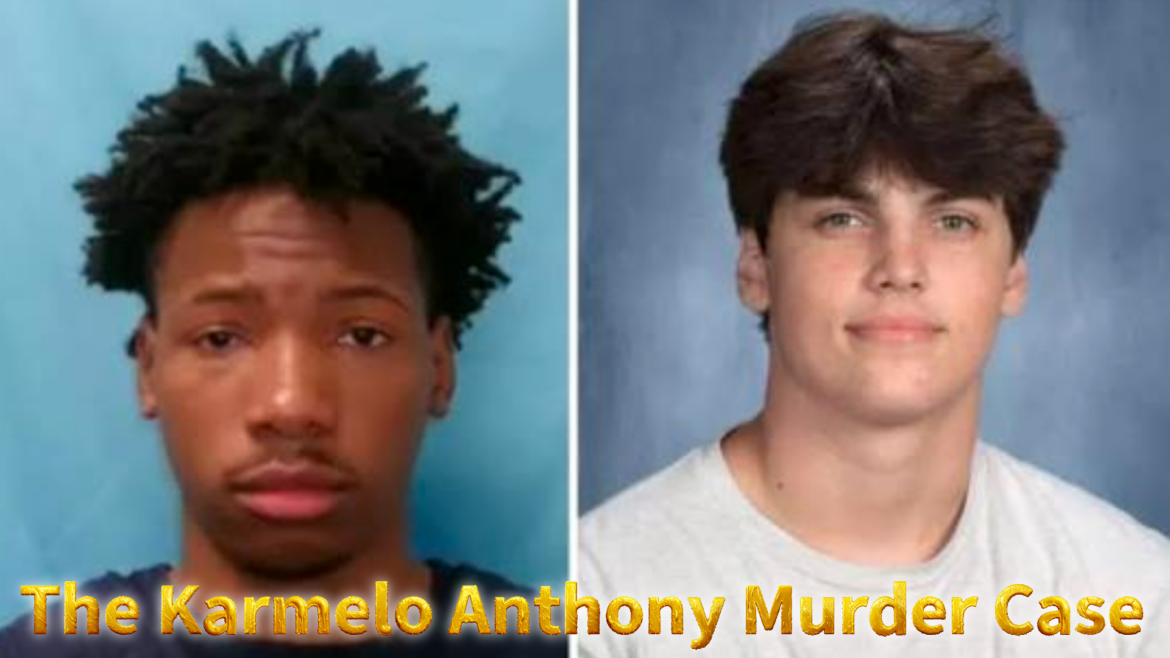
Karmelo Anthony was found guilty of murder and sentenced to 35 years in prison by a Texas jury on June 9, 2026. The 19-year-old was convicted for the April 2025 fatal stabbing of 17-year-old Austin Metcalf at a high school track meet in Frisco, Texas.
The Incident
- On April 2, 2025, Anthony and Metcalf got into an argument during a rainy track meet at Kuykendall Stadium.
The dispute started when Anthony (then 17) sought shelter from the rain under a team tent belonging to Memorial High School, where Metcalf was a student.
Words were exchanged, and a physical confrontation took place, which ended when Anthony fatally stabbed Metcalf in the chest with a pocketknife.
The Trial
Following days of emotional testimony, the jury deliberated for less than three hours before reaching a guilty verdict.
The trial began in early June 2026 at the Collin County Courthouse in McKinney, Texas. Under Texas law, 17-year-olds are tried as adults.
The Prosecution argued the stabbing was an unjustified, provoked “sneak attack”. They presented video evidence and witness testimony stating that Anthony threatened the victim by saying, “Touch me and see what happens” before pulling a knife from his bag.
The Defense maintained Anthony was acting in self-defense, claiming the much larger Metcalf had initiated the physical contact and that Anthony, who is smaller, acted out of split-second terror. Anthony faced a penalty of five to 99 years, or life in prison.
His defense team requested a lesser sentence under a “sudden passion” claim, which argues the defendant acted in a split-second surge of emotion before having time to calm down.
The jury rejected this claim and sentenced him to 35 years in state prison. He will be eligible for parole after serving half of his sentence.
To learn more about how the jury and court documents laid out the facts, would you like me to find:
Statements from the victim’s family addressing public backlash and swatting threats?
Details on the body cam footage and evidence presented in the courtroom?
Media coverage regarding the racial composition of the jury and civil rights debates?




- The District Attorney: The Collin County District Attorney is Greg Willis, who oversaw the office handling the case. The lead prosecutor inside the courtroom who argued the case and delivered the closing arguments was First Assistant District Attorney Bill Wirskye.
- The Trial Judge: The case was presided over by Collin County District Judge John Roach Jr.
Justice on Trial: The Deeply Troubling Conviction of Karmelo Anthony
By Scoop
A rainy afternoon at a high school track meet in Frisco, Texas, was supposed to be about sports and student achievements. Instead, it became the flashpoint for a tragedy that has culminated in what many are calling a devastating miscarriage of justice. On June 9, 2026, 19-year-old Karmelo Anthony—a Black student with a clean record and a bright future—was found guilty of murder and swiftly sentenced to 35 years in prison for the fatal stabbing of 17-year-old Austin Metcalf, who was white.
While Collin County District Attorney Greg Willis was quick to claim that “justice was served,” the community looking at the raw facts of this case sees a vastly different, deeply troubling reality. From jury selection to the speed of the verdict, the entire process has exposed systemic biases that should alarm anyone who believes in a fair trial.
The All-White Jury and Media Blackout
The trial was compromised before testimony even began. In a case heavily charged with racial dynamics, the legal system completely failed to provide Karmelo Anthony with a jury of his peers.
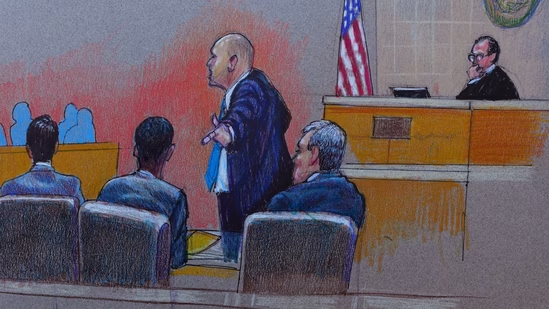
Through tactical legal maneuvers, every single potential Black juror was struck from the pool. Observers noted that standard excuses—including claiming individuals were teachers or had schedule conflicts—were used to systematically push Black candidates out. Anthony was left to face a jury without a single Black voice to bring perspective to the room.
Adding fuel to the fire, independent Black media outlets attempting to cover the trial reported being shut out of the courtroom, limiting transparency in a case that desperately needed it. When the system operates in total darkness, away from the communities most impacted by it, accountability disappears.
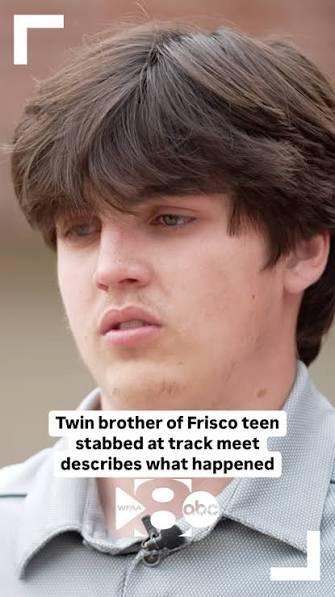
A Rapid-Fire Verdict for a Massive Case
Perhaps the most shocking aspect of the trial’s conclusion was its speed. This was a complex, emotionally heavy murder case with a young man’s entire life hanging in the balance. A standard trial of this magnitude easily warrants days of meticulous review, deep debates, and an exhaustive examination of the evidence.
Instead, the jury deliberated for less than three hours.
Two to three hours. That is all the time an all-white jury took to decide that a 19-year-old should spend the next 35 years of his life behind bars. The lightning-fast decision strongly suggests their minds were made up long before they walked into the deliberation room.
Shoves, Fear, and the Lack of Adult Supervision
The core of the incident centers on a split-second moment of chaos and fear. On that rainy afternoon, Karmelo Anthony—seeking shelter from the downpour—sat under a tent belonging to a rival team. Testimony showed an immediate and aggressive confrontation unfolded. Several students from the opposing school demanded he leave.
The defense pointed out the staggering physical disparity: Metcalf stood at 6-foot-1 and weighed over 200 pounds, completely towering over the 5-foot-8, 130-pound Anthony. When Metcalf physically pushed him, Anthony, isolated and surrounded under a foreign tent, reacted out of pure fear.
While prosecutors argued that Anthony escalated the situation by drawing a folding knife from his backpack and stating, “Touch me and find out,” the undeniable truth remains: Texas law does not require you to wait until you are severely beaten before you defend yourself. Karmelo explicitly told officers immediately after his arrest, “I was protecting myself… He put his hands on me. I told him not to.”
Furthermore, this tragedy forces a glaring question: Where were the adults?
Where were the coaches, the stadium officials, or the school supervisors while teenage boys from rival schools were escalating a verbal dispute into physical violence under a team tent? The absolute failure of adult supervision created the vacuum of chaos that allowed this tragedy to happen. Yet, it is the Black teenager who pays the ultimate price with his freedom, while the system that failed to protect either boy washes its hands of blame.

Two Different Standards of Grace
Before this tragic afternoon, Karmelo Anthony was an “A” student with no criminal history—a young man who had spent his life doing exactly what we tell our kids to do to succeed. On the other side, details of the victim’s past behavior and records were heavily protected or downplayed throughout the trial, creating a lopsided narrative that painted Anthony as a cold-blooded aggressor rather than a terrified kid in a hostile situation.
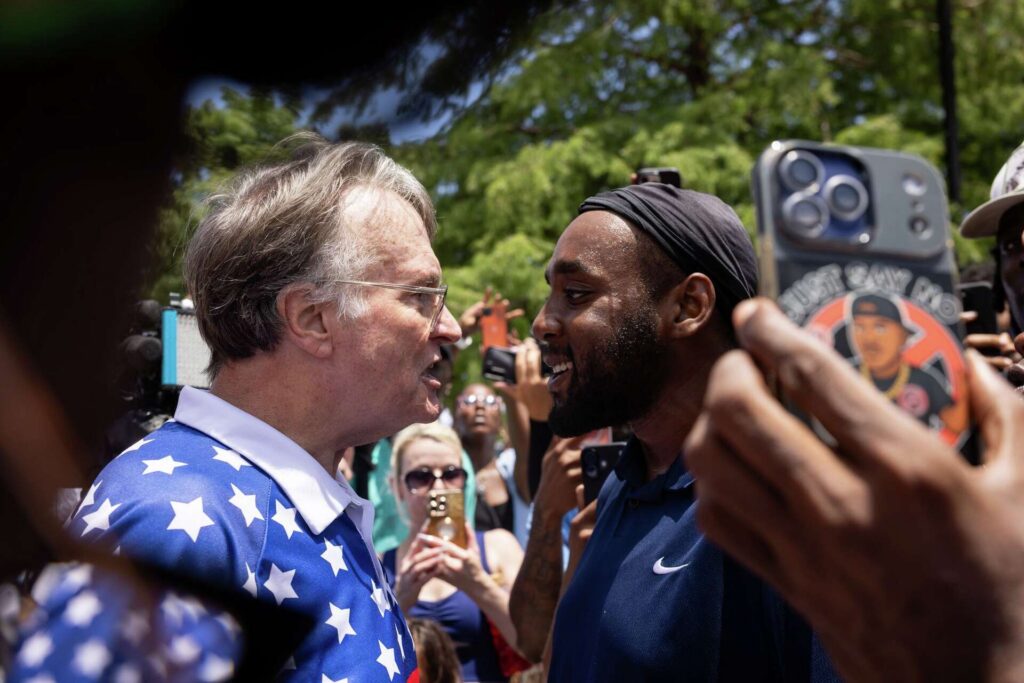
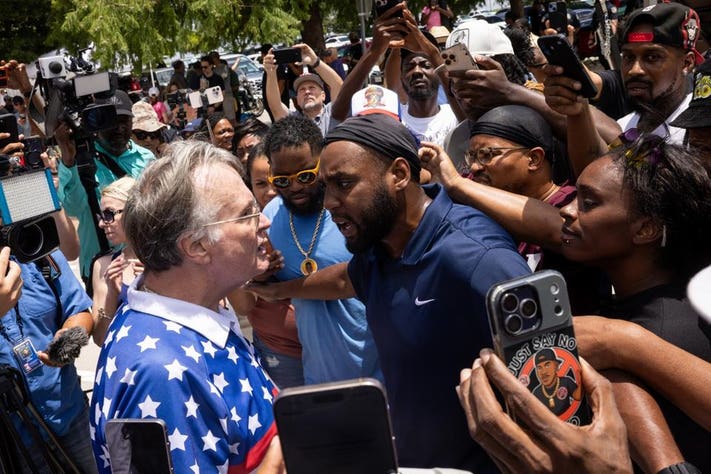
As Karmelo broke down in tears and was led out of the McKinney courthouse in handcuffs, wails of grief echoed from his family and a massive crowd of supporters gathered outside chanting “Free Karmelo.”
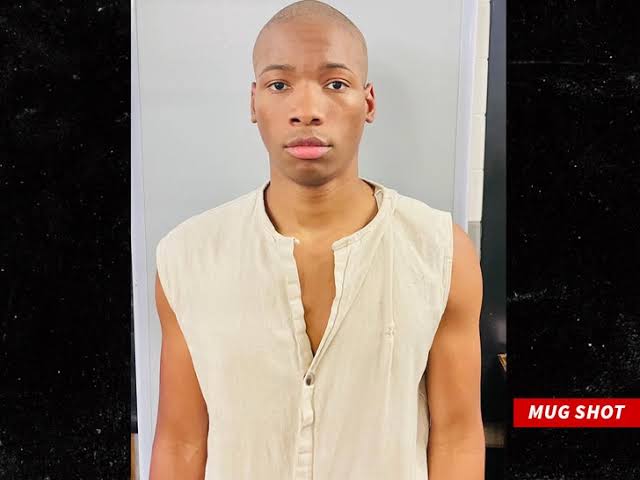
Justice is supposed to be blind, but in Collin County, Texas, it feels entirely selective. Karmelo Anthony didn’t just lose his case; he was denied a fair process by a system designed to reach a conclusion fast, quiet, and without the nuance that a young Black man’s life deserved.



Key Details in Article:
- The Venue: Collin County Courthouse (McKinney, Texas)
- The Judge: District Judge John Roach Jr.
- The Prosecution: Lead Prosecutor Bill Wirskye (under DA Greg Willis)
- The Verdict: Guilty of Murder (Jury rejected the lesser charge of manslaughter and the mitigating “sudden passion” clause)
- The Sentence: 35 years in prison (Must serve at least half—17.5 years—before becoming eligible for parole)
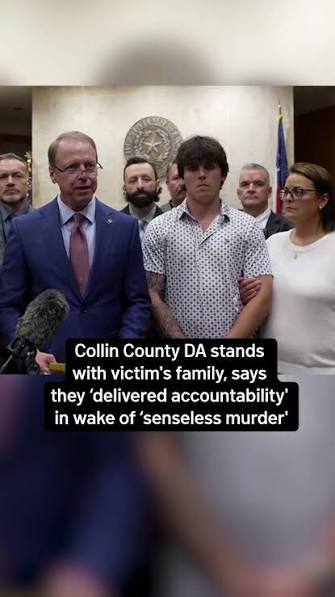
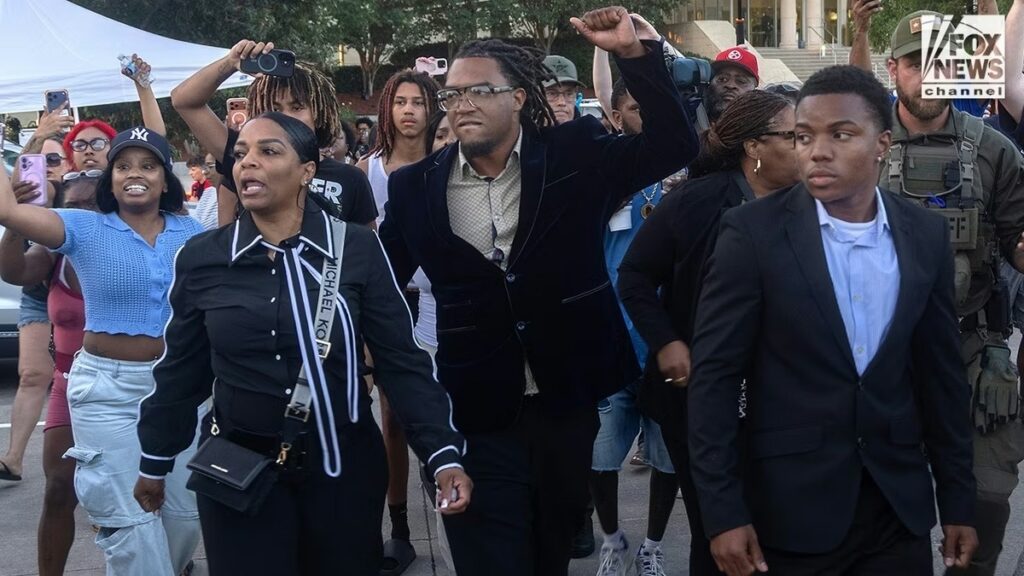
Community March For Karmelo Anthony in McKinney Texas
Judge defends barring cameras from Karmelo Anthony murder trial, says it was ‘an easy decision’
The judge who presided over the high-profile murder trial of Karmelo Anthony is standing by one of the case’s most controversial decisions, saying keeping cameras out of the courtroom was necessary to ensure a fair trial.
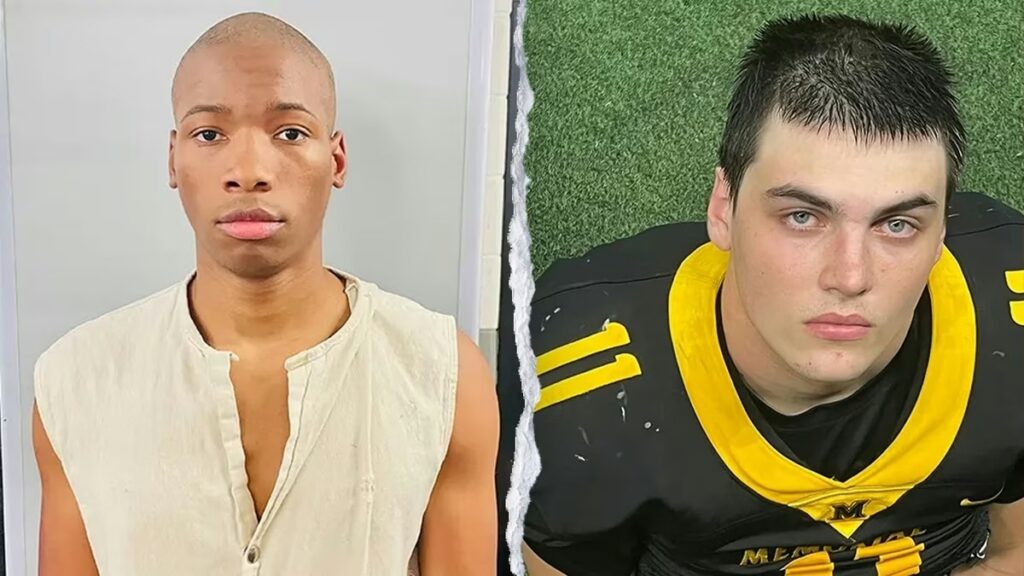
Judge John Roach of the 296th District Court said this week that it was the correct decision to bar cameras and livestreaming during Anthony’s murder trial.
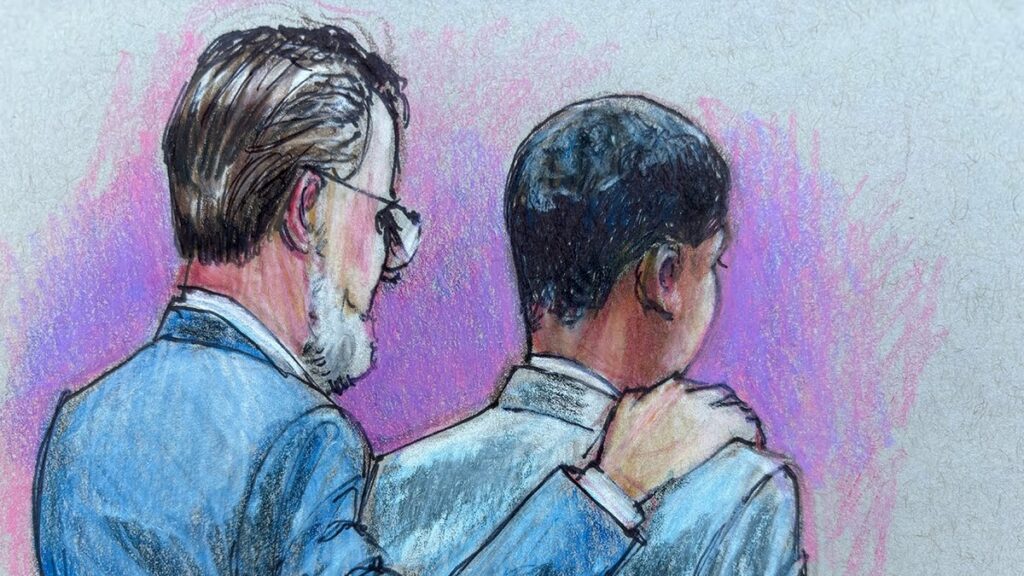
Court sketch shows Karmelo Anthony during his trial in Collin County, Texas, where he was convicted of murder in the 2025 stabbing death of Austin Metcalf on June 9, 2026.
A Collin County jury on Tuesday sentenced Anthony to 35 years in prison after finding him guilty of murder in the fatal stabbing of 17-year-old Memorial High School student Austin Metcalf during a high school track meet in Frisco, Texas.
Lawyers for Charlie Kirk’s alleged assassin ask to ban courtroom cameras amid ‘content tornado
Karmelo Anthony’s grandmother, Toni Hayes, leaves court in McKinney, Texas, on June 9, 2026. Anthony was sentenced to 35 years for the murder of Austin Metcalf at a track meet in Frisco last year.



“Oh, there were no Black jurors. You know why? Because you can’t be unbiased, you dumb sh*ts. If you answer the question, ‘I can’t send a Black man to jail because he’s Black, you’re not getting on the jury,’ said Jeff. “You’re so unintelligent you can’t even fill out a form correctly.”